roampal-core
by roampal-ai·★ 46·Score 45
Outcome-based persistent memory MCP server that improves AI assistants through conversational learning.
Overview
Roampal-core is an innovative MCP server that implements outcome-based persistent memory for AI coding assistants like Claude Code and OpenCode. It automatically injects relevant context before AI responses and scores outcomes to promote good advice while demoting bad ones. The system maintains five memory collections with different lifespans: working (24h), history (30 days), patterns (persistent while useful), memory_bank (permanent), and books (permanent reference docs). This creates a feedback loop that makes the AI assistant progressively smarter with each exchange.
Try asking AI
After installing, here are 6 things you can ask your AI assistant:
When to choose this
Choose Roampal when using Claude Code or OpenCode and want to create a persistent memory system that learns from successful coding patterns and user preferences.
When NOT to choose this
Not ideal if you need integration with other AI coding assistants beyond Claude Code and OpenCode, or if you prefer a self-contained solution without additional server components.
Tools this server exposes
6 tools extracted from the READMEsearch_memoryDeep search across all memory collections
add_to_memory_bankStore permanent facts (identity, preferences, goals)
update_memoryCorrect or update existing memories
delete_memoryRemove outdated information from memory
score_memoriesScore previous exchange outcomes (Claude Code only)
record_responseStore key takeaways from significant exchanges
Comparable tools
Installation
Installation
pip install roampal
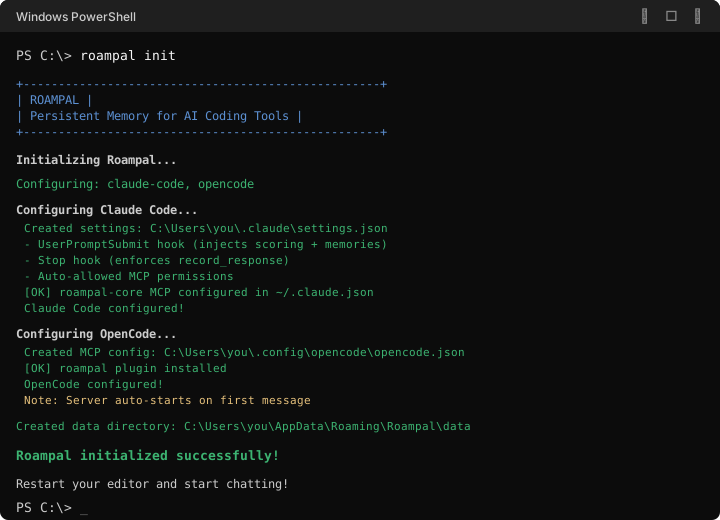
roampal init
This will auto-detect installed tools and configure them. You can also target specific tools:
roampal init --claude-code
roampal init --opencode
For Claude Desktop, add the following to your claude_desktop_config.json:
{
  "mcpServers": {
    "roampal": {
      "command": "roampal",
      "args": ["start"]
    }
  }
}
Starting the Server
roampal start  # Start the HTTP server manually
roampal status  # Check if server is running
FAQ
- How does Roampal improve AI performance over time?
- Roampal scores each interaction outcome, promoting good advice and demoting bad advice. This creates a feedback loop where the system gets progressively smarter with each exchange, learning from past successes and failures.
- What memory collections does Roampal maintain?
- Roampal maintains five memory collections: working (24h current session), history (30 days of past conversations), patterns (proven solutions), memory_bank (identity, preferences, goals), and books (uploaded reference docs).
- How does Roampal handle different platforms like Claude Code and OpenCode?
- The core loop is identical across platforms, but the implementation differs: Claude Code uses hooks for context injection and capture, while OpenCode uses a plugin. OpenCode also uses an independent sidecar for scoring to avoid self-assessment bias.
On Hacker News
Recent discussion from the developer community.
- Story by roampal · 2025-12-16
Compare roampal-core with
Last updated · Auto-generated from public README + GitHub signals.