mie
by kraklabs·★ 42·Score 46
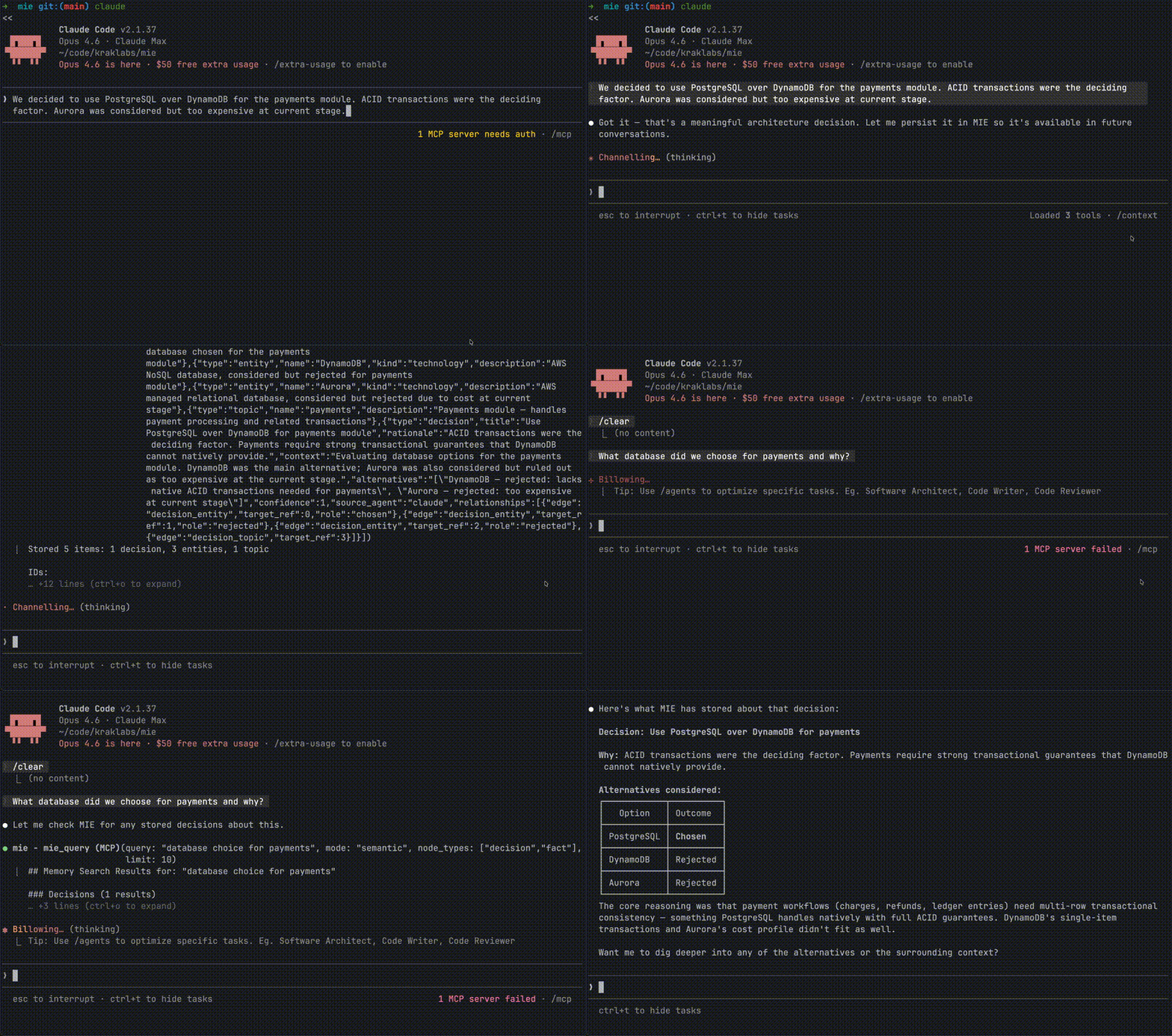
MIE is a persistent memory graph MCP server that enables AI agents to share and recall knowledge across sessions.
Overview
MIE (Memory Intelligence Engine) creates a shared knowledge graph that AI agents like Claude, ChatGPT, and Cursor can access. It stores structured information as facts, decisions, entities, and events with relationships between them, rather than simple chat logs. The architecture uses an embedded CozoDB database with optional semantic search via Ollama embeddings. The MCP server exposes 12 tools for storing, querying, updating, and managing the knowledge graph, with zero server-side inference costs since it relies on the client agent to evaluate what's important.
Try asking AI
After installing, here are 5 things you can ask your AI assistant:
When to choose this
Choose MIE when you need persistent memory across multiple AI agents and want structured knowledge storage with relationship tracking.
When NOT to choose this
Don't choose MIE if you need a simple chat history replacement or if you require a cloud-based solution with multi-device synchronization (not yet available).
Tools this server exposes
12 tools extracted from the READMEmie_analyzeSurfaces related context before storing — the agent decides what's worth remembering
mie_storeWrites facts, decisions, entities, events, and relationships to the graph
mie_bulk_storeBatch store up to 50 nodes with cross-references — ideal for importing knowledge from files or git history
mie_getRetrieve a single memory node by ID with full details
mie_querySemantic search, exact lookup, or graph traversal across all node types
mie_listList and filter nodes with pagination
mie_updateInvalidate outdated facts, update statuses — with full history preserved
mie_deleteRemove nodes with cascade (embedding + edges) or remove individual relationships
mie_conflictsDetect contradictions in stored knowledge
mie_exportExport the full graph as JSON or Datalog
mie_repairRebuild HNSW indexes and clean orphaned embeddings
mie_statusGraph health, node counts, usage metrics
Comparable tools
Installation
Install MIE using Homebrew:
brew tap kraklabs/mie
brew install mie
Initialize with:
mie init                    # Quick setup with defaults
mie init --interview        # Interactive setup
Configure as MCP server in Claude Desktop (.mcp.json):
{
  "mcpServers": {
    "mie": {
      "command": "mie",
      "args": ["--mcp"]
    }
  }
}
The MCP server will start automatically when needed.
FAQ
- What makes MIE different from platform-specific memory features?
- MIE works across all AI agents (Claude, ChatGPT, Cursor, etc.), stores structured data with relationships rather than flat text, and is portable/exportable. Platform memory is limited to a single provider and lacks rich relationships between knowledge items.
- Can I use MIE without embeddings/Ollama?
- Yes, MIE works without embeddings. You'll still get graph traversal and exact-match search capabilities. Embeddings only add semantic search capabilities.
On Hacker News
Recent discussion from the developer community.
- Story by kraklabs · 2026-02-06
Compare mie with
Last updated · Auto-generated from public README + GitHub signals.