AskUserQuestionPlus
by JoJoJotarou·★ 37·Score 43
MCP server providing a web interface for user questionnaires with keyboard shortcuts and multi-option support.
Overview
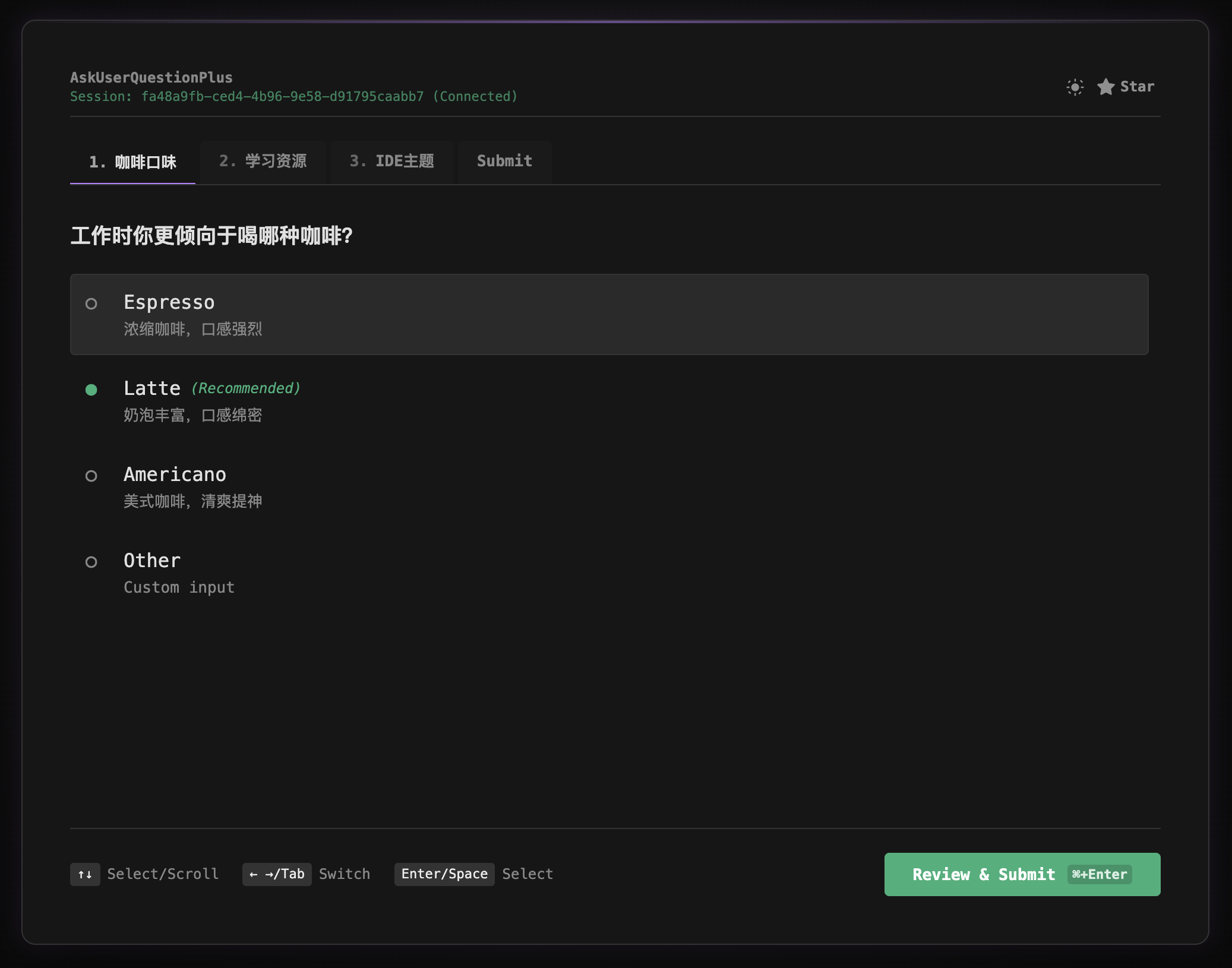
AskUserQuestionPlus is a feature-rich MCP server that creates web-based questionnaires for LLM interactions. It supports both single and multiple choice questions with recommended options, custom input fields, and full keyboard navigation. The server uses WebSocket for real-time communication between the LLM client and web interface, with configurable timeout protection.
Try asking AI
After installing, here are 3 things you can ask your AI assistant:
When to choose this
Choose AskUserQuestionPlus when you need to collect user input interactively within your AI workflow, especially if you value a polished UI with keyboard support and real-time communication.
When NOT to choose this
Don't choose this if you need to integrate with non-HTTP MCP clients, require user authentication, or need to handle more than 20 questions in a single session.
Tools this server exposes
1 tool extracted from the READMEask_user_question_plusAsks the user questions through a web interface and returns their answers
Comparable tools
Installation
# Install via npm
npm install -g ask-user-question-plus

# Run directly
npx ask-user-question-plus

# With custom parameters
npx ask-user-question-plus -- --port=8080 --timeout=300000

# Claude Desktop configuration
{
  "mcpServers": {
    "AskUserQuestionPlus": {
      "command": "npx",
      "args": ["ask-user-question-plus"],
      "env": {}
    }
  }
}
Compare AskUserQuestionPlus with
Last updated · Auto-generated from public README + GitHub signals.