1xn-vmcp
by 1xn-labs·★ 49·Score 44
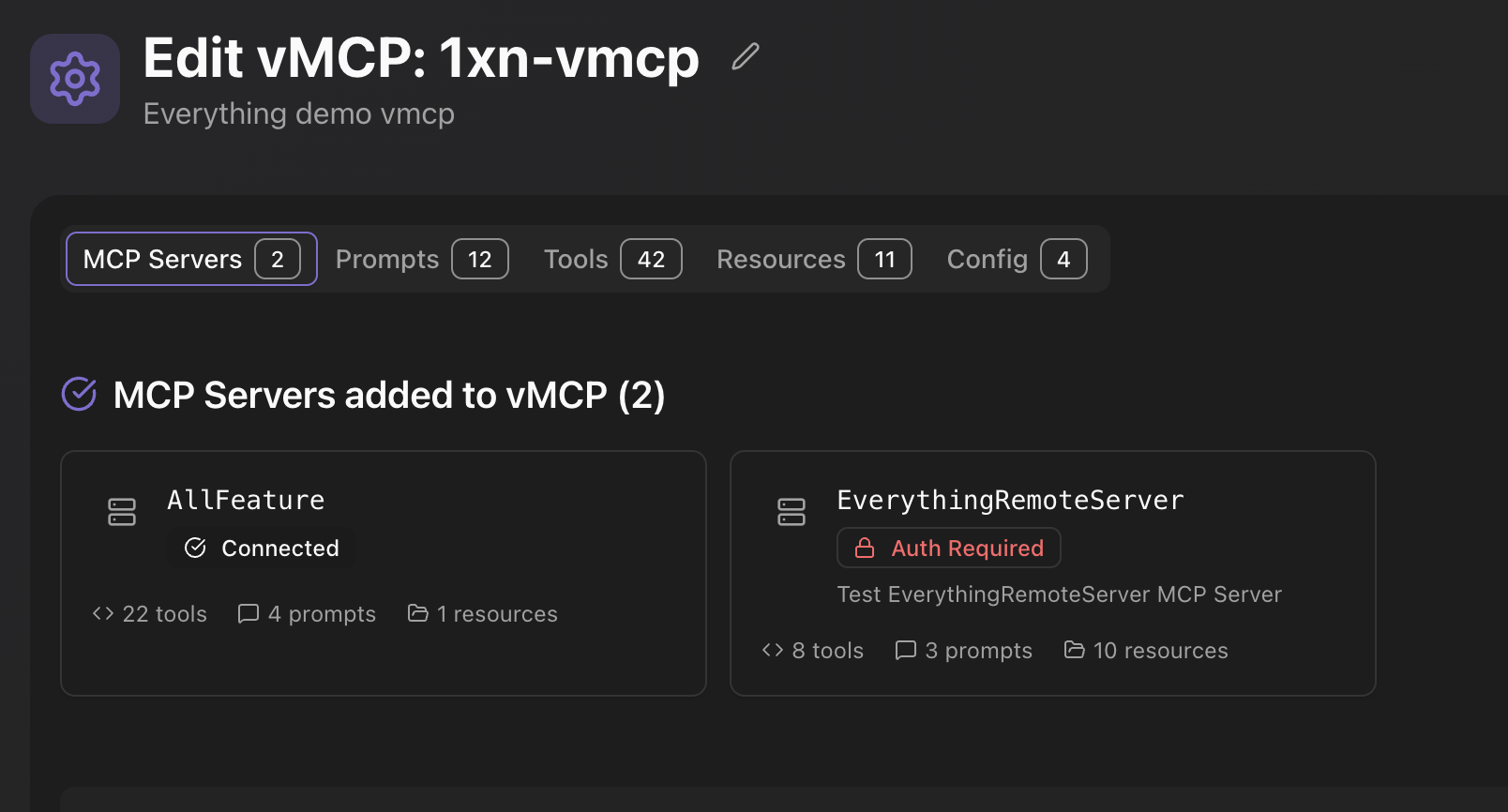
vMCP is a virtual MCP server platform that combines multiple MCP servers into a unified endpoint with customization capabilities.
Overview
vMCP is an open-source tool for composing, customizing and extending multiple MCP servers into a single logical, virtual MCP server. It solves configuration management, authentication, and customization challenges by providing a layer of abstraction on top of standard MCPs. Users can create custom tools, programmable prompts, and add knowledge base files while managing authentication across different clients like Claude, ChatGPT, and VS Code.
Try asking AI
After installing, here are 5 things you can ask your AI assistant:
When to choose this
Choose vMCP when you need to manage multiple MCP servers across different AI clients (Claude, ChatGPT, Cursor) and want unified authentication, tool composition, and customization without code changes.
When NOT to choose this
Avoid vMCP if you only need a single MCP server, as it adds complexity that's unnecessary for simple use cases.
Comparable tools
Installation
Installation
Using uv (recommended):
uvx --from 1xn-vmcp@latest vmcp runUsing pip:
pip install 1xn-vmcp
vmcp run
Using Docker:
docker pull onexn/vmcp:latest
docker run -it onexn/vmcp:latest vmcp run
Claude Desktop Configuration
Add to Claude Desktop's config.json:
{
  "mcpServers": {
    "vmcp": {
      "command": "uvx",
      "args": ["--from", "1xn-vmcp@latest", "vmcp", "run"]
    }
  }
}
FAQ
- What is vMCP?
- vMCP is a virtual Model Context Protocol platform that allows users to compose, customize and extend multiple MCP servers into a single logical endpoint with a no-code interface.
- How does vMCP solve authentication challenges?
- vMCP allows users to authorize MCP servers once and reuse the authentication across different clients like Claude, ChatGPT, VSCode, and Cursor.
Compare 1xn-vmcp with
Last updated · Auto-generated from public README + GitHub signals.